

Let’s weave a story, beginning with a quintet of sisters. Let’s call this quintet The Muses, goddesses of the arts and proclaimers of heroes–heroes like Hercules!
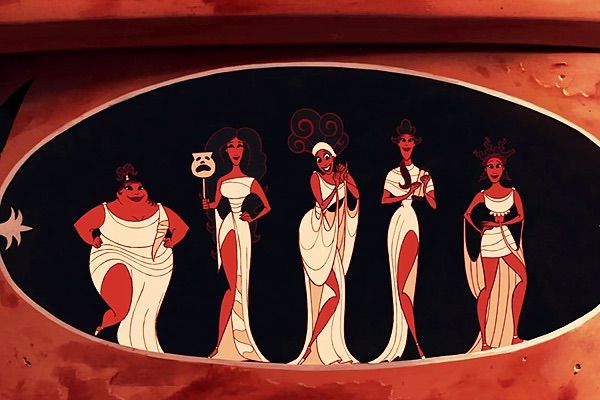
Thalia, Melpomene, Calliope, Clio, Terpsichore
The Muses are no strangers to seasoned Disney fans like me who’ve watched Disney’s Hercules (1997). We enjoyed their musical ensemble introducing the gallant story of the zero-to-hero protagonist, “Gospel Truth,” but beyond that we weren’t able to learn more about them throughout the movie. I’ve been enthralled with these elusive side characters for their Black girl essence since a child and always wished Disney would create a spin-off dedicated to their story. Imagine my elation to learn that Farrah Rochon, author of Almost There, the twisted tale of Princess Tiana, had answered my prayers in her recent publication, Bemused.
Their story begins with their mother, Mnemosyne, Titaness and goddess of memory. When we first learned of the gigantic brutes called Titans that ran amuck, they’re depicted as enormous monsters with destructive powers. Those are second generation Titans, unlike Mnemosyne and her siblings who are the first generation. If you’re familiar with real Greek mythology, which this story is based on, you’ll remember the story of Uranus (heaven) and Gaea (earth), who created Mnemosyne and her siblings, the Titans. The Greek gods and goddesses we know of now are children of these Titans. In this story, some of the Titans sought to annihilate human beings but the gods rallied behind Zeus to thwart their plan, thus ensuing the Titannomachy or The Great War. Zeus rose as ruler of Olympus after winning the war and imprisoning the Titans. A faction of the Titans were spared because they sided with Zeus in the war, but Mnemosyne sided with neither initially. Until she was found by Athena, goddess of war and wisdom while fleeing. Athena took her to Olympus where she was imprisoned but given small freedoms to live amongst the gods. There, she grew closer to Athena and Artemis, bonding over gardening and sisterhood, but she knew still that her freedom was not her own. She made a deal with Zeus that she would create five girls who would sing his praises and provide a distraction from sorrow amidst the mortals who lamented after the war, and of course, Zeus agreed. Mnemosyne began sketching her girls, whom she named and grew fond of–fell in love with even. But something happened that threatened her flowers and she knew she had to flee.
The Titaness wiped the memories of every god in Mount Olympus, including her best friends, of her existence and created a life amongst the mortals. There, she began to create her daughters. Calliope, muse of epic poetry first; then Clio, muse of history; next Melpomene, muse of tragedy, then Terpsichore, muse of dance; and finally Thalia, muse of comedy.
Fearful that somehow the gods would remember her and come after her, Mnemosyne kept a close eye on her girls and often moved them from small town to smaller town in paranoid fits. She’d warned them vaguely of dangers in the world, but hid her true identity from everyone she encountered–including her daughters. But that doesn’t mean they experienced no joy. They eventually settled in a town called Krymmenos and the girls grew into their gifts and talents, using them to put on small performances every year for their mother’s birthday.
Calliope, as the oldest of the muses, was raised with the responsibility to look after her sisters and they lean on her for most all of their decisions. This is further amplified when the Titaness of memory occasionally slips into these strange memory spells that render her immobile. I’m sure any eldest daughter can relate to Calliope’s exasperation with this dynamic, so much so that she tucks her dreams of moving to the big city of Thebes away because how on earth will her sisters function without her there? She isn’t the only one with dreams, however. Terpsichore (Ree) put hers into action by secretly purchasing a dance studio and starting her own school for young girls in the town. Though she only had two students, she was ecstatic for what the future held. Mnemosyne couldn’t know about it, though, for she forbade the girls from publicly announcing themselves in any way–not that they knew who they truly were, but she feared even showcasing their talents could attract the wrong attention. She wasn’t wrong.
For her birthday, as tradition required, the girls put on a show dedicated to their mother. This time, Mnemosyne was not the sole audience. The girls chose to host it at Ree’s new dance studio with hopes of impressing their mother and attracting new patrons to the dance school. Not only did word of the talented girl group catch wind, the current gusted all the way down to the Underworld, where Hades’ perked ears received mischievously.
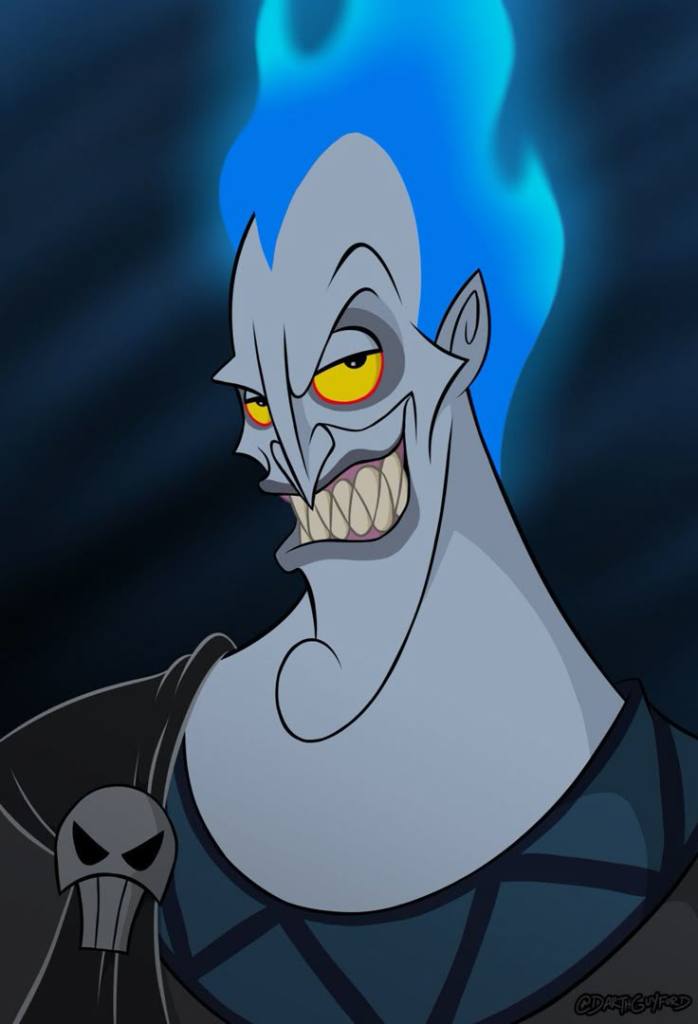
If you know anything about the unscrupulous god of the Underworld, Hades, you know he’s always sought revenge against his younger brother, Zeus. His wish to usurp his throne is a song as old as rhyme, so he is motivated to use this new information to devise a new plan–one he is certain will succeed this time. He dispatches his henchmen, Pain and Panic, to kidnap Mnemosyne and her girls. The moronic duo have never been good for completing a task, but they make good on imprisoning Mnemosyne in a network of caves right outside of the Underworld. The girls watched as the two shapeshifters carried their mother away after a series of panicked declarations that they must leave Krymmenos. But before she disappeared, she left her oldest daughter with a clue that would lead them to the truth. With the riddles and poetry clued to them, the quintet devised a hopeful
plan and set out to the city of Thebes to petition the gods for help. After all, Mnemosyne admitted to her daughters that she was a goddess herself, and Calli figured they’d be more than willing to help find her. Unbeknownst to the girls, their mother’s Titany was only half of her story on Olympus.
With the help of two willing gods, the girls uncover clues that help them decode amorphous riddles that not only inch them closer to their mother, but to themselves–their true selves. Each obstacle develops their talents and shows them exactly what their mother meant when she’d say, “You’re never more powerful than when you are together.” This inspiring tale is equipped with more than just themes of the dangers of family secrets, but also of sisterhood, talent, and the power of community. Mnemosyne soon learns that isolation was never the answer, and the girls learn that being a unit was never a crutch, but their superpower.
Join these five beautiful sisters on a perilous journey of self discovery and historical unearthing in the riveting pages of Bemused by Farrah Rochon. This was a particularly exciting read for me because I read it on Libby, the public library app. If you have a library card with your city’s public library, you have unfettered access to a world of books and audiobooks at your fingertips, reader. I love this app because sometimes trips to the library may be unfeasible and even more often, books can be expensive. This provides us with an avenue anyone can use to satiate their bibliophilic desires. If you’re interested, get started here:
If you’ve had a chance to peruse this riveting tale, comment below which of the Muses is your favorite. Personally, I can’t pick because each of them contribute to the plot so well, and I am so indecisive. I’m sure your takes can sway me though. If you haven’t read yet, I hope you’re inspired by this review to crack open the pages and delve into Disney’s take on Greek mythology. Thank you for reading.
Please like, comment, and share to expand our conversation. Scroll just a little further to subscribe to The Plait, a newsletter that will keep you braided into each new strand.


Join the conversation!