
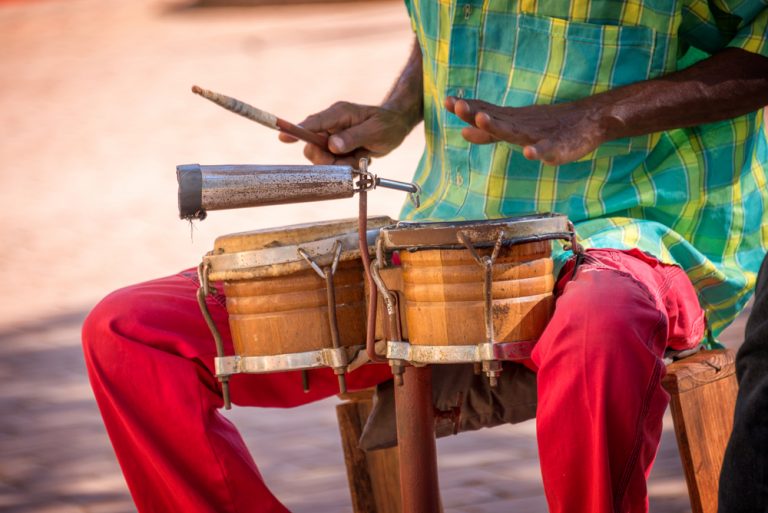
Our Hispanic Heritage Month celebration continues! Join me, bailamos–let’s dance! Move your hips to the sensual drums of salsa, samba, merengue, and more. Let’s explore the rhythm and roots of AfroLatinx music.
AfroLatinx music was birthed in the islands of Latin America and the Caribbean by mixing Spanish guitars and harmonies with the beats of African drums. If you’ve been following our Hispanic Heritage Month series and read Hispaniola’s Hideous History, you’ll remember that enslaved Africans were taken to the island to supplement labor as the indigenous Taíno people’s population decreased under the violence of colonialism. Well, a great majority of the enslaved Africans were stolen from West African countries. With them, they carried culture and tradition, including drums they are known for even
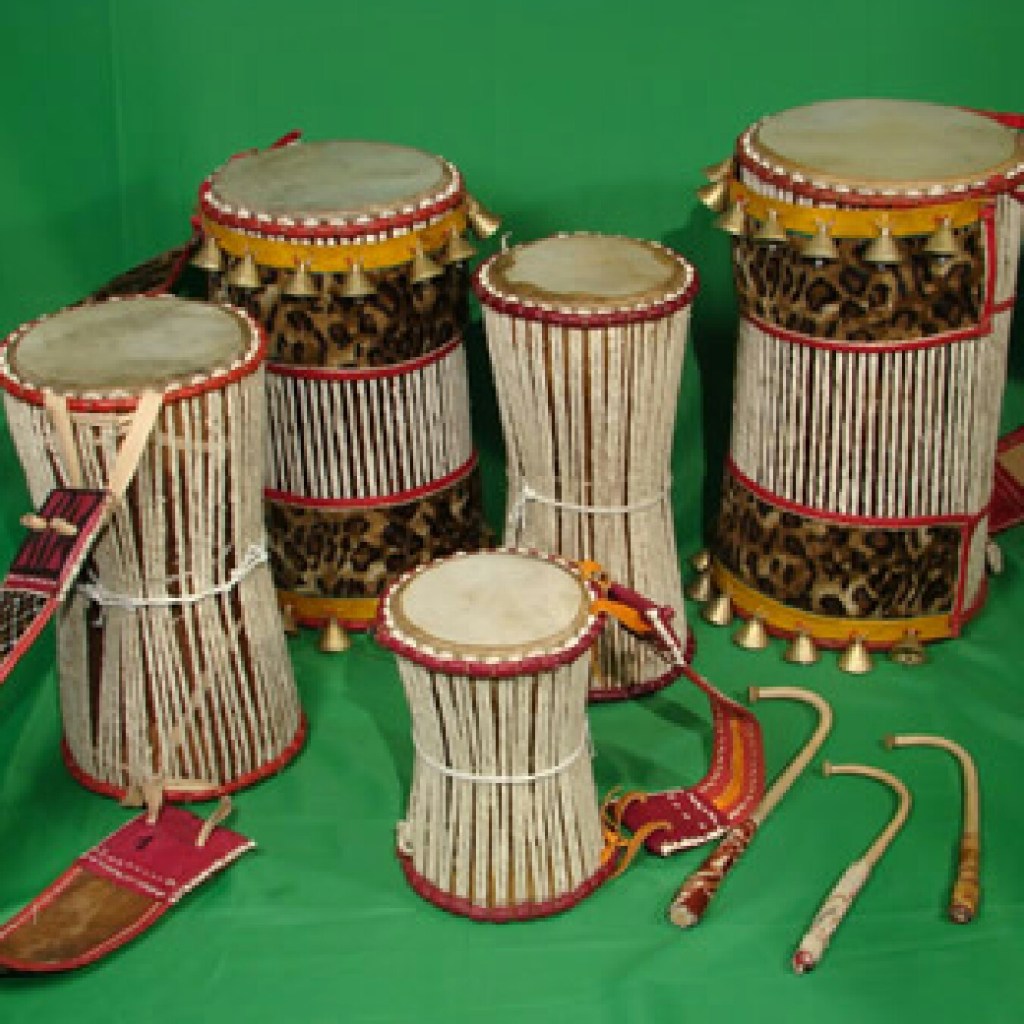
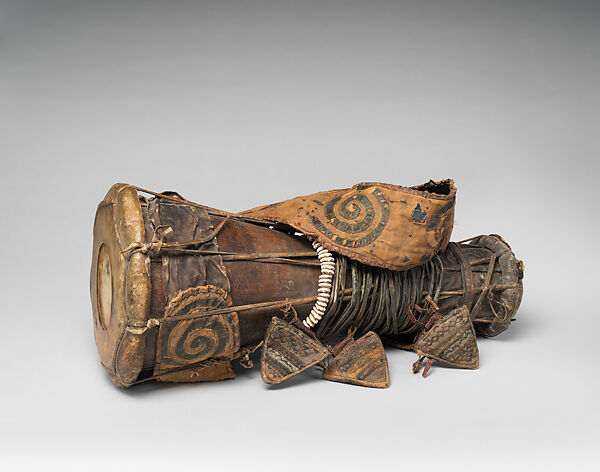
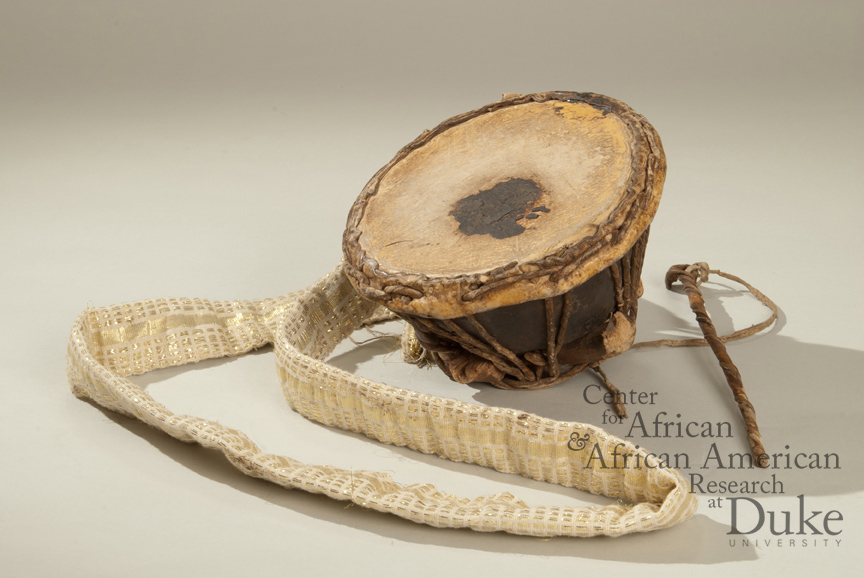
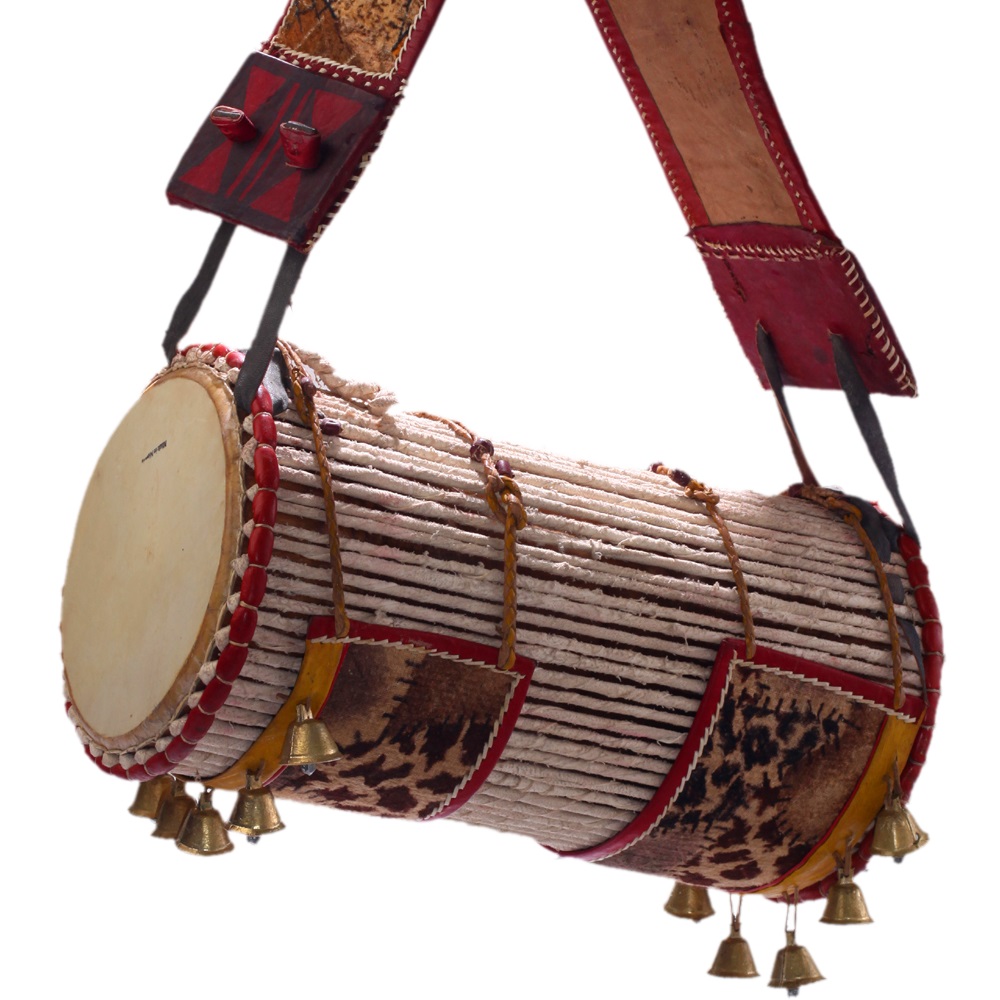
today. Some of them include the dundun drum, the bàtá, the gudu-gudu drum, and the talking drum. As they mingled with the Spanish and Taínos, cultures collided and created entirely new genres of music. Today, we’ll listen to and explore mambo, salsa, samba, cumbia, merengue, rumba, reggaeton, and son cuban!
Mambo
Mambo’s story begins long before packed dance floors and glittering lights. Its roots stretch back to the spiritual practices of the Congo region in Central Africa, where mambo in Kikongo means “conversation with the gods.” Music wasn’t just sound; it was prayer, storytelling, and survival. When enslaved Africans were forced to Cuba, they carried these sacred rhythms with them. Over generations, those rhythms intertwined with Spanish melodies and European instruments, creating a rich musical language. Genres like rumba and danzón emerged, carrying the heartbeat of African rituals beneath their refined surfaces. By the 1930s, innovators like the López brothers began to push danzón forward, adding driving percussion and call-and-response elements that echoed the very ceremonies their ancestors once held.
When Dámaso Pérez Prado burst onto the scene, he didn’t just launch a dance craze–he gave this ancestral sound global reach. His bold, brassy arrangements brought the spirit of the Congo into Havana’s clubs and New York’s ballrooms. Artists like Tito Puente and Tito Rodríguez built on that foundation, blending mambo with salsa and Latin jazz, ensuring its evolution while keeping its soul intact. Mambo is more than music to dance to–it’s a living archive of Afro-Cuban history, a reminder of how joy, resistance, and heritage can coexist in a single rhythm. Every beat is a call back to the ancestors, proof that their voices were never silenced.

Salsa
Salsa isn’t just music. Its memory, migration, and resistance all wrapped up in rhythm. Its heartbeat traces back to West and Central Africa, carried across the Atlantic through the violent forced migration of slavery. In Cuba, those African rhythms–heavy percussion, call-and-response, intricate polyrhythms–met Spanish melodies, European classical forms like contradanza, and even remnants of Indigenous Taíno culture. The result was a blend of styles like son montuno, rumba, bomba, and plena–each one a story of survival and joy in the face of oppression. Salsa didn’t just appear; it grew out of centuries of people creating beauty while fighting to hold onto their identities.

The word “salsa” as we know it didn’t take shape until the 1960s, when Afro-Caribbean migrants–especially Puerto Ricans and Cubans–brought these sounds to New York City. There, visionaries like Johnny Pacheco and the Fania All-Stars gave the music a name and a stage, combining son, guaracha, pachanga, and jazz into something electric. Salsa was built for the body as much as the ear. The dance evolved alongside the music:
sensual and communal, full of improvisation and storytelling, with each region adding its own twist, like Cali’s lightning-fast footwork or Puerto Rico’s bomba-infused styling. Today, salsa lives everywhere, but its roots are still visible, reminding us that this art form was–and is–a testament to the power of cultural blending and collective survival.
Samba
Samba isn’t just Brazil’s national music–it’s a rhythm born out of survival, spirituality, and community. Its earliest form, samba de roda (circle samba), grew in 19th-century Bahia during gatherings of enslaved Africans on sugar plantations. These circles weren’t just parties; they were sacred spaces of resistance and connection, where song, dance, and drumming became ways to reclaim joy in the midst of unimaginable oppression. The very name “samba” comes from semba, a Kimbundu word meaning “invitation to dance,” which perfectly captures its essence. Samba has always been a fusion of cultures, blending African polyrhythms with Indigenous melodies and even traces of Portuguese military marches. That blending created something entirely new–a sound that could hold the weight of history while moving people to their feet.
When slavery was abolished in 1888, Afro-Brazilians migrated to Rio de Janeiro, carrying their traditions into the city’s favelas. There, samba evolved into more than music–it became a voice for the marginalized. Authorities often tried to suppress it, labeling samba gatherings as criminal or dangerous, but the music only grew louder. With nothing more than drums, tambourines, and makeshift instruments, entire neighborhoods transformed into living, breathing soundscapes. By the early 1900s, musicians like Donga and Pixinguinha began recording samba songs, paving the way for its rise as a cultural force. Samba wasn’t just entertainment; it was a form of protest, a way to affirm identity in a society that often tried to erase it.
Samba’s bond with Carnival tells the rest of its story–a journey from resistance to celebration. Carnival began with European and Catholic roots, but Afro-Brazilians turned it into something much bigger: a dazzling, defiant explosion of color, movement, and sound. Samba schools (escolas de samba) became the heartbeat of Carnival, competing to tell stories through music, dance, and elaborate parades. What was once
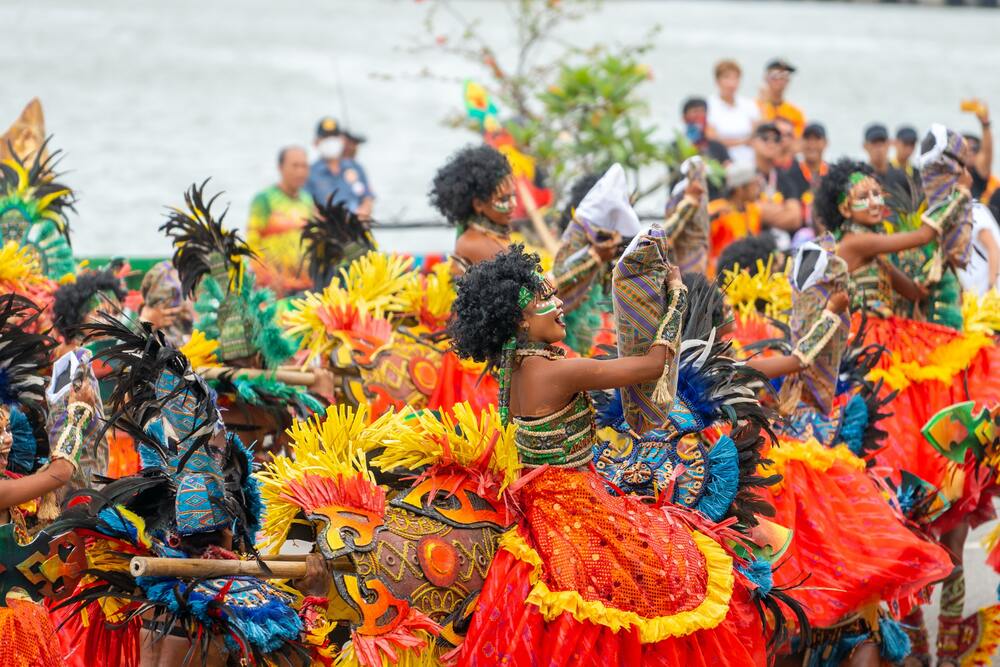
stigmatized is now celebrated worldwide, though its roots in struggle and Black creativity remain central to its legacy. Today, samba shows up in many forms–from traditional samba de roda to the fast, electrifying rhythms of Carnival to collaborations with jazz and pop. Through it all, samba remains what it has always been: a living, breathing archive of history and resistance, and an open invitation for everyone to dance.
Cumbia
Cumbia’s roots run deep, tracing back to Colombia’s Caribbean coast during the 17th and 18th centuries, when African, Indigenous, and Spanish cultures were forced into contact through colonization and slavery. Enslaved Africans carried their drum traditions, most notably the tambor alegre and llamador, which gave cumbia its distinctive rhythm. Indigenous communities contributed haunting melodies through instruments like the gaita flute, while Spanish colonizers added their harmonies and European instruments, including guitars and later brass. The word “cumbia” is thought to derive from the Kimbundu term cumbe, meaning dance or celebration, reflecting its origins as both music and movement. Originally, cumbia was performed at nighttime gatherings by enslaved people and their descendants, blending courtship rituals with collective resistance through rhythm and storytelling.
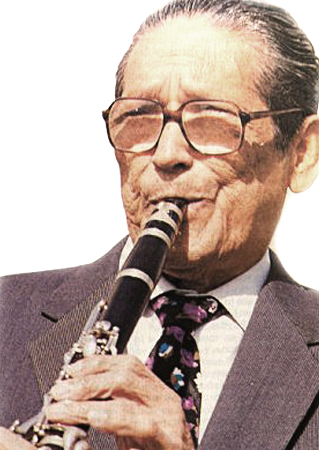
By the mid-20th century, cumbia began to evolve beyond its folk roots. In the 1940s and ’50s, Colombian bandleader Lucho Bermúdez transformed it by introducing big-band arrangements that brought the genre into urban dance halls and radio stations. As cumbia spread across Latin America, it adapted to each country’s unique cultural landscape–Mexico introduced accordion-driven norteño elements, Peru infused psychedelic guitar riffs, and Argentina slowed the tempo for a more romantic style. This adaptability cemented cumbia as one of Latin America’s most enduring musical traditions. Today, its influence can be heard everywhere, from traditional festivals to global pop hits, carrying centuries of history and migration in every beat.
Merengue
Merengue is more than just the music that makes you move–it’s a living testament to survival and cultural identity. Its roots lie in the Dominican Republic, with strong ties to the enslaved Africans who worked sugar plantations. According to oral histories, enslaved people would sometimes have their feet tied together, forcing them to dance in a distinctive two-step pattern. That movement is said to have inspired the signature “hitch” of merengue, a dance that combines simplicity with rhythmic precision. Musically, early merengue relied on percussion and simple melodies, often played on instruments like the tambora (a double-headed drum) and güira (a metal scraper), creating a driving, hypnotic pulse. Over time, the accordion was introduced, expanding the harmonic possibilities and giving rise to the classic merengue conjunto ensemble.
As merengue spread across the Caribbean and eventually to the United States, it continued to evolve. Big band arrangements emerged in the 1930s and 1940s, blending brass sections, piano, and string accompaniment with traditional rhythms, while later decades saw the addition of electronic instruments and synthesizers. These innovations allowed merengue to thrive in dance halls, radio, and recordings, appealing
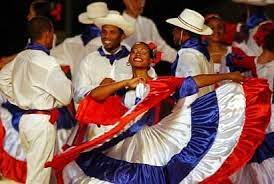
to younger audiences while preserving its traditional heartbeat. Its cultural significance has been recognized by UNESCO, which named merengue an Intangible Cultural Heritage of Humanity, acknowledging not only its musical and dance innovation but also the history it carries–the stories of resilience, adaptation, and identity passed down through generations. Merengue is a beat, a step, and a history lesson all at once, inviting everyone who dances to participate in a centuries-long conversation of survival, joy, and celebration.
Rumba
Rumba emerged in mid-19th century Cuba, rooted in the urban neighborhoods of Havana and Matanzas, where African rhythms met Spanish melodies in a defiant, infectious fusion. Enslaved Africans and their descendants brought complex polyrhythms from their homeland, but performing openly was risky. To avoid detection by Spanish landowners intent on maintaining cultural dominance, musicians relied on makeshift percussion–crates, boxes, and other everyday objects–to create the pulse that would define rumba. The genre grew as both entertainment and resistance, a sonic assertion of identity and community in the face of oppression.
Over time, several forms of rumba developed, but by the 1950s, only three traditional styles survived: guaguancó, the most popular; yambú; and columbia. Each carries its own rhythm, dance style, and cultural significance, reflecting the nuanced storytelling embedded in the music. Today, rumba is primarily performed by folkloric groups in Cuba, preserving its historical and cultural roots while sharing the joy, energy, and resilience of Afro-Cuban traditions. From clandestine street performances to staged folkloric ensembles, rumba remains a living testament to creativity, resistance, and the enduring power of music to bind communities across generations.
Reggaeton
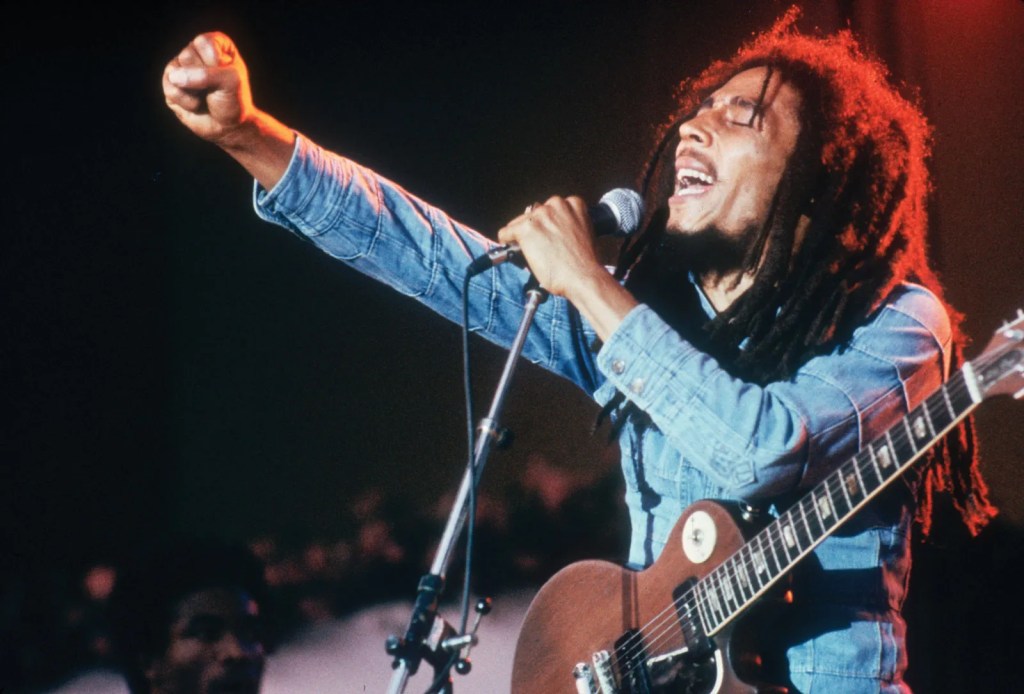
Reggaeton is more than just a genre; it’s a living dialogue between African, Caribbean, and Latin American musical traditions. Its roots trace back to the 1980s in Panama, where Jamaican laborers brought dancehall reggae during the Panama Canal construction. Artists like Bob Marley had already globalized reggae in the 1970s, spreading socially conscious lyrics and the unmistakable backbeat that would shape future Caribbean
music. In Panama, these reggae rhythms were blended with Spanish lyrics, giving birth to reggae en Español. Pioneers like El General and Nando Boom built on this foundation, while the genre’s defining “dembow” rhythm, originating from Shabba Ranks’ 1990 track Dem Bow, became the heartbeat of reggaeton.
As reggaeton migrated to Puerto Rico, it absorbed local flavors and technological innovations. The 1990s underground scene pushed raw, socially conscious lyrics, often circulated via mixtapes, while artists like Daddy Yankee, Don Omar, and Ivy Queen brought it to mainstream audiences. Reggaeton today continues to evolve, fusing its roots in Jamaican reggae, Afro-Caribbean beats, and Latin rhythms with global influences. Its popularity reflects not just dance and entertainment, but a lineage of resistance, cultural pride, and musical storytelling–connecting Bob Marley’s revolutionary spirit to the pulsing streets of Puerto Rico and beyond.
Son Cubano
Son Cubano originated in the rural communities of Cuba’s Oriente province, blending African rhythms with Spanish melodic structures to create a sound both grounded and transcendent. Its predecessors–changüí, nengón, kiribá, and regina–laid the foundation for a genre that thrived on communal gatherings and dance. Early ensembles featured instruments like the guitar or tres, maracas, guiro, claves, bongos, and the botija, each adding texture and rhythm to the music. Son Cubano was more than entertainment; it was a social language, connecting communities, preserving African-derived rhythms, and expressing both joy and hardship through dance and song.
In the 1940s, Arsenio Rodríguez expanded the genre, reintroducing African elements and paving the way for son montuno, a more improvisational and rhythmically complex style. This evolution influenced the rise of salsa in New York City, where Cuban émigrés blended son with jazz, mambo, and other Latin rhythms to create a new, dynamic musical movement. Today, Son Cubano remains a cornerstone of Latin music, its infectious beats and layered percussion resonating across generations. From the agricultural roots of Oriente to global dance halls, son tells a story of cultural fusion, resilience, and the enduring power of rhythm.
I absolutely hope you had just as much fun reading and dancing along as I had composing this project. Every beat and tune had me on my feet, nearly forgetting that I was supposed to be researching and writing instead of practicing salsa steps across my living room! Nonetheless, exploring the musical connection between Africa and Central America was not only necessary in order to highlight their place in the African diaspora, but also a fun way to introduce you, reader, to new styles of music you may have never been exposed to. In this process, I’ve added several Latin American countries to my travel bucket list and a plethora of songs to a new AfroLatinx playlist I created on Amazon Music. If you think I should share it on The Braid Blog, comment below and let me know! As always, thank you for reading.
Please like, comment, and share to expand our conversation. Scroll a little further to subscribe to The Plait, a biweekly newsletter that’ll keep you tangled in each new strand.


Join the conversation!