
Happy Independence Day to my people, my country, my culture! On October 1, 1960, Nigeria’s independence charter was signed, sealed, and delivered, and we started our journey to become an independent republic. Today, we celebrate 65 glorious years of green and white flag waving! I contemplated writing a spiel about Nigerian history to celebrate this momentus occasion, but I’ve decided that there’s so much to look forward to as a Nigerian and that’s worth noting. So, instead of looking back, join me, reader, in looking ahead. There are so many aspects of Nigerian culture that are consistently evolving. Since a child there were aspects of tradition I’ve always loved. Today, I will share some of them with you.
Let’s talk about my top three favorite privileges of being Nigerian. It was no easy feat drafting this short list since my entire life revolves around Nigerian culture and it’s all encompassing nature. But I had to make something shake for Nigerian Independence. So here are my favorite parts of Nigerian culture:
3. Nollywood
If you know, you know the unseriousness of Nollywood movies! I’m even cackling as I’m writing this, just thinking of old movies with intense storylines highlighting culture, music, and witchcraft. The movies are so enticing, it’s easy to ignore the terrible filming and graphics. And I’m not talking about these new movies on Netflix; I mean the ones you can only find on Youtube! My parents used to spend hours playing movies on the smart tv and I’d be absolutely entranced in utter disbelief though I hardly had any idea what the movies’ names were. Amazing actors like Patience Ozokwor and Yul Edochie quickly became my favorites, and gave us iconic lines like, “Oh… it’s even plastic.”
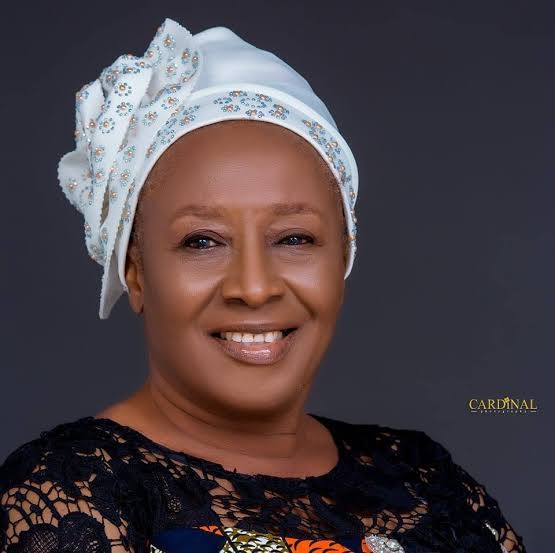

Through the unseriousness, nonetheless, the movies taught us diasporans what life in Nigeria is like–whether hyperbolic or not. They also showed us a glimpse into why our parents were the way they were, in my opinion. I remember watching a movie about a young pregnant woman who drank juice at her mother-in-law’s home and later found that she was unable to give birth, even after a year carrying. Come to find out, the mother-in-law had placed some juju hex on her designed to keep her from giving birth and could only be broken by destroying a shackle she kept in her home. I learned several lessons: don’t consume anything you didn’t see being prepared; even those you think you can trust can betray you; and anything can be rectified through the chain-breaking power of Jesus Christ. Lolol! All lessons my parents constantly, incessantly, dramatically believed were imperative for a safe, full life. If you’ve never seen a good 2000’s Nollywood movie, venture over to YouTube and look one up. You will not be disappointed. Until then, enjoy this snippet from Patience Ozokwor.
2. Asoebi
I changed this one a couple of times because it was hard to level everything this means to me. Being an asoebi girl is about community, which is a huge part of Nigerian culture; fashion, a trademark aspect of being a Nigerian babe; and partying–which we can not get enough of. I’ve only been an asoebi girl twice in my life but I’ve attended countless weddings and celebrations that this encompasses everything to do with community.
My first time being an asoebi girl was in December 2024 for my homegirl’s extravagant wedding in Abia State, Nigeria. An asoebi girl is similar to a bridesmaid but not really. It’s when all your homegirls–whether you’re from the same community or just really good friends–dress in the same lace as a show of community on your big day. We dance in with the bride and celebrate her all night long. Nigerians value community almost as much as we do achievement. My parents are part of multiple Nigerian communities in Baton Rouge: Igbo Union, Nigerian Women’s Association, The People’s Club, United Nigerian Women’s Association, African Christian Fellowship–the list can go on and on. The importance of community was instilled in me as a child and I carried it with me into adulthood.
Being part of these communities has gifted me many aunties that aren’t my blood but it makes no difference, and tons of homegirls I once thought were my cousins. Here are a few from another wedding we were asoebi girls for:
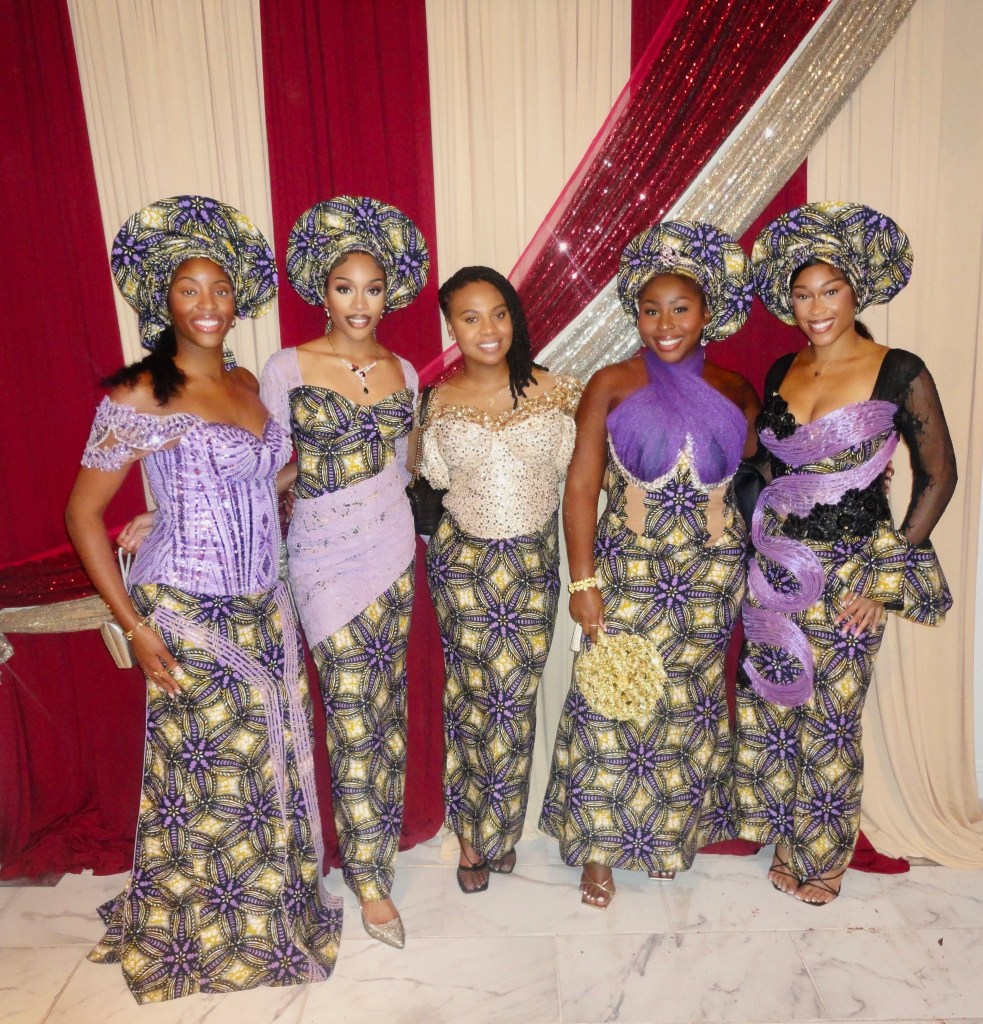
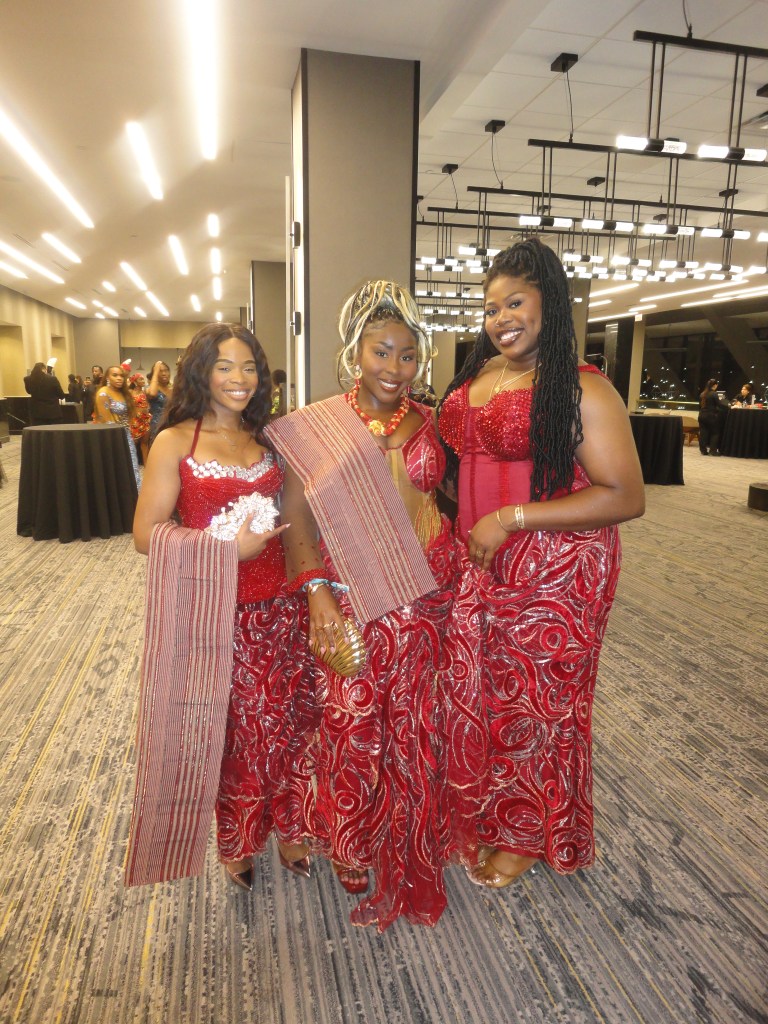
We love asoebi so much, we even decided to wear it at the Umu Igbo Unite convention in August, yet another organization committed to uplifting Nigerian community and culture. It’s a staple that says, “These women are my girls, my community, this is who I’m here for,” essentially. I love any excuse to scour Pinterest for outfit ideas, take my measurements with a tape measure, send them to my tailor back home, and wait to receive the package in the mail–or ask a traveling relative to bring it back for me. Even without asoebi, I look for any reason to get an outfit made. My favorite part is expressing myself with vibrant fashions, and I love that our weddings aren’t just about a white dress. Six yards of lace, Isi Agu, and a gele certainly LOVE to see me and my homegirls coming!
1. Music & Dance
THIS IS IROKING.COM! If you know, you know and if you don’t know… NOW YOU KNOW! I contemplated separating these two and making them 1 & 2, but I struggled with ranking them and realized they go hand in hand. Since childhood, my homegirls and I adored Nigerian music and dance. We started out in Aunty Rufina’s living room and graduated to Nigerian community events and parties.
My love for Nigerian music began with the likes of Sunny Bobo, Arabanko, Ababa Nna, Chimuanya, and The Oriental Brothers. From Igbo Highlife music, I stumbled upon Awilo Longombo and The Mavins, a music group formed by Don Jazzy, including Tiwa Savage and Korede Bello. I’ve always been a Flavour fan as he’s one of my parents favorites and a musical legend, and I soon fell down the rabbit hole and in love with P Square, Tekno, Wizkid, Bracket, Davido, and more. Vuli Ndlela by Brenda Fassie was the first song we danced to as a group; Skelewu by Davido and Kukere by Iyanya soon followed. My main playlist now incorporates each of these artists and I have since added Rema, Odumodublvck, Shallipopi, Ayra Starr, BXNX fka Buju, Boj, Adekunle Gold, Crayon, Burna Boy, and Asake, just to name a few of my favorites. Today, I’m incapable of going a day without hearing just one song and even then, I can’t remain seated. One of the best aspects of community gatherings and weddings is the ability to dance without bounds. These are mild examples I’m willing to post:
Shaking waist and nyash is an art of expression, skill, and culture that transcends language. Though I favor Igbo music, most mainstream Afrobeats is in the Yoruba language or Pidgin, a creole mix between native tongue and English. It’s the beats of the talking drum, flute, and Ogene that speak to me most. Just know if there’s Nigerian music playing and I’m not dancing, I might be dead!
If I had to add to this list, it’d be never ending. I wouldn’t trade my culture for anything. I thank God everyday that I was born Nigerian. My heritage is a huge part of my personality and identity. I couldn’t imagine life without it. Though I was born and raised in the states, my experiences are a testament to the preservation of authentic culture even in the diaspora.
Happy 65th Nigerian Independence Day to all who celebrate, to all tribes and states. From Lagos to Imo to Edo and back across the country, let’s celebrate who we are and what we stand for. We are a standard of excellence that ripples throughout the world. When people see a Nigerian surname, there is a precedent set and though we are not a monolith, there are so many characteristics we share no matter from where in the diaspora we hail. Thank you for reading!
I hope you enjoyed reading a piece of me, my home, and heritage, and hopefully you can add a few pieces of insight, too. What are your favorite parts of being Nigerian? Is it the food? The festivals? The fashion? I implore you to share. Please like, comment, and share to expand our conversation. Scroll a bit further to subscribe to The Plait, a biweekly newsletter that’ll keep you woven into each new strand.


Leave a reply to Obidimma Cancel reply